

Public libraries have long been trusted access points to information. Today, their role is expanding.
As the digital information landscape becomes more complex, media literacy has become a critical priority for libraries worldwide. It’s no longer enough to simply provide access. Libraries are increasingly responsible for helping patrons evaluate what they read, question its credibility and make sense of conflicting narratives.
Today, we’re looking at why access to quality news is such an important part of that work, and why it’s foundational to effective media literacy initiatives.
How news consumption has changed
The way people consume news has shifted dramatically.
For many, social media has become the primary gateway to information. According to the Reuters Institute’s Digital News Report 2025, 54% of people in the U.S. now access news via social media and video platforms, a shift that reflects a broader global trend. Meanwhile, influencers and online creators are increasingly shaping how audiences discover and engage with the news.
Articles are discovered through algorithms, headlines are viewed out of context and content is often stripped of its original framing. At the same time, AI-generated content is making it harder to distinguish between what’s real, manipulated, or entirely fake — adding to the growing challenges libraries face in supporting media literacy.
As discussed in our post on how libraries can prepare for media literacy issues of the future, the rise of misinformation, algorithm-driven discovery and evolving digital habits has fundamentally changed how people engage with content.
As a result, patrons are increasingly asking the same questions:
-
- Can I trust this source?
- Is this article real?
- Why are different outlets reporting the same story in completely different ways?
This is the challenge at the heart of modern media literacy. Access to information has never been easier, but understanding it has never been more difficult.
Why quality journalism matters
Not all information is created equal.
Quality journalism is built on standards that are largely invisible to the reader, but essential to the integrity of the content. Professional reporting typically involves:
-
- Verified sources
- Editorial oversight
- Fact-checking processes
- Accountability and corrections when errors occur
This structure is what gives journalism its credibility and why it continues to play a vital role in helping people make informed decisions.
We explore this further in our piece on the role of journalism and libraries in supporting media literacy, where access to credible reporting is positioned as a cornerstone of informed, democratic societies.
In contrast, much of the content consumed through social platforms has none of these safeguards. It can be published instantly, by anyone, with no requirement for accuracy, sourcing, or balance. The result is an environment where misinformation can spread quickly and where trust is easily eroded.
For libraries supporting media literacy, this distinction matters. Access to professionally produced journalism gives patrons a benchmark and a way to recognize the difference between credible reporting and unverified information.
Why breadth of perspective is just as important
Quality alone isn’t enough. Media literacy also depends on exposure to a wide range of perspectives.
No single publication can capture the full picture of a story. Coverage is shaped by geography, audience, editorial stance and cultural context. Without access to multiple viewpoints, it becomes difficult for readers to recognize bias, understand framing, or fully engage with complex issues.
This is where breadth becomes critical. A diverse news collection allows patrons to:
-
- Compare how different outlets report the same event
- Identify differences in tone, language and emphasis
- Develop a more nuanced understanding of global issues
It also ensures that libraries can serve diverse communities more effectively, including multilingual readers, newcomers and those seeking international perspectives.
Bridging the gap between importance and access
Library professionals widely recognize the value of quality news and diverse perspectives in supporting media literacy. However, access doesn’t always match intent.
For example, the recent Ready to Act report published by the Australian Library and Information Association (ALIA) in partnership with PressReader, found that nearly all (99%) Australian public libraries surveyed consider diverse, trustworthy news sources critical to media literacy development. Yet far fewer feel fully equipped to deliver on that need in practice, with only 22% of respondents providing 30+ quality news sources.
This gap reflects broader challenges across the sector, including limited budgets, staffing constraints and the growing complexity of the digital landscape.
Understanding the importance of media literacy and diverse, quality news sources is one thing. Providing the appropriate resources is another.
Where platforms like PressReader come in
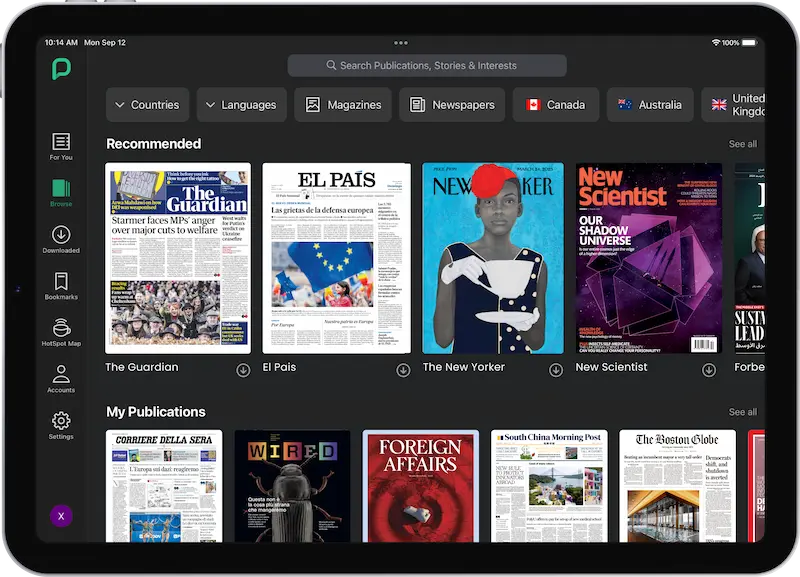
To effectively support media literacy, libraries need access to both quality journalism and a wide breadth of sources — without adding complexity to already stretched teams.
This is where digital platforms play an important role.
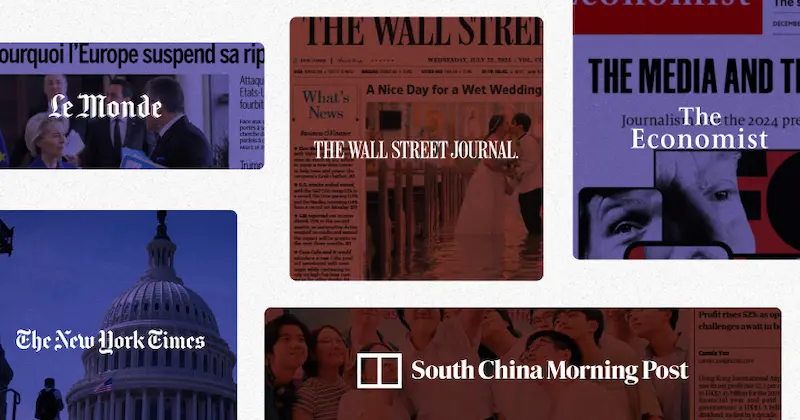
PressReader empowers libraries to provide their communities with access to thousands of the world’s most credible newspapers and magazines, all in one easy-to-use digital resource. By bringing together local, national and international publications, it enables patrons to explore different perspectives, compare coverage and engage more critically with the news.
For libraries, this simplifies the process of building a globally relevant, diverse collection. For patrons, it creates a more meaningful and practical way to make sense of the world around them.
Supporting stronger, more informed communities
Media literacy is no longer a niche initiative. It’s a fundamental part of how libraries serve their communities.
And at the centre of it is access to quality news.
By providing trusted journalism and a breadth of perspectives, libraries give people the tools they need to navigate today’s information environment with confidence, to question what they read, understand different viewpoints and make informed decisions.
If you’re interested in exploring this topic further, you can download the full Ready to Act media literacy report to see how Australian public libraries are approaching media literacy in practice, and where there are still opportunities to go further. While the report is specific to Australian libraires, the insights carry global relevance.